Modern organizations need more than a single email list to effectively engage supporters. Audiences today expect personalized communication, relevant content, and the ability to control what they receive — and organizations need tools that make managing those relationships easier, smarter, and more connected.
That’s exactly what the new Nucleus Email Subscriptions feature delivers.
Built directly into the Nucleus platform, Email Subscriptions gives organizations a modern, flexible, and intelligent way to manage audience communication preferences while keeping everything fully connected to CRM records, segmentation tools, and the email builder.
Move Beyond One-Size-Fits-All Email Lists
Traditionally, many organizations have relied on a single large email list with limited subscriber control. This often leads to generic messaging, lower engagement, and higher unsubscribe rates.
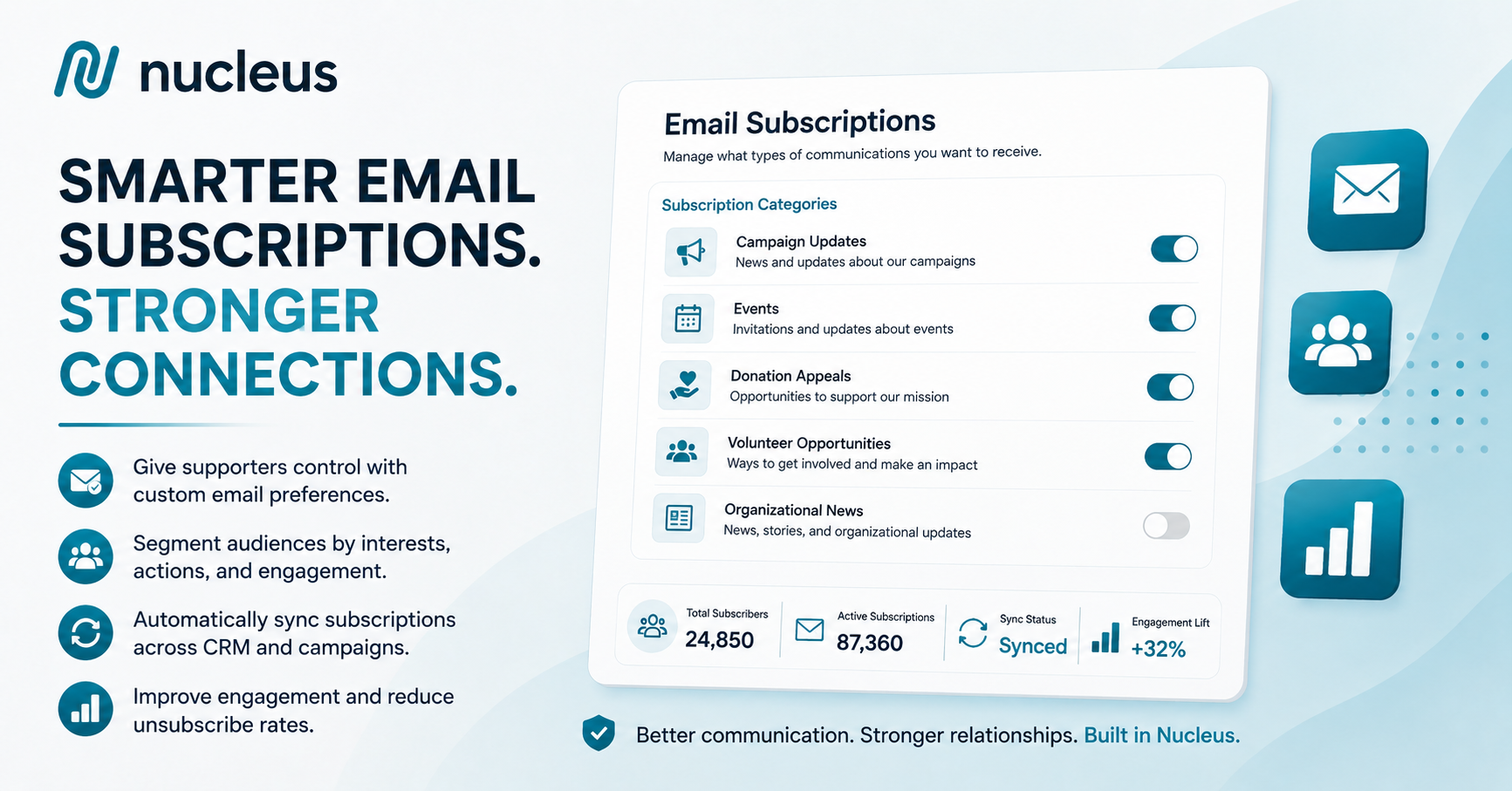
With Nucleus Email Subscriptions, organizations can now create and manage multiple subscription types across:
• Campaign updates
• Events
• Memberships
• Donations
• Volunteer programs
• Website signups
• And more
This allows teams to organize audiences more strategically while delivering communication that feels more relevant and personalized to each supporter.
Smarter Segmentation and Better Campaign Performance
Nucleus Email Subscriptions helps organizations build stronger audience engagement strategies through smarter targeting and cleaner data management.
Teams can now:
• Build more targeted and personalized email campaigns
• Reduce unsubscribe rates by giving users more control
• Automatically enroll supporters into relevant communication categories
• Segment audiences based on interests, actions, engagement, and signup source
• Keep subscriber preferences synced across CRM, email, and audience tools in real time
• Improve campaign performance through more intelligent audience targeting
Because subscription preferences are directly tied into the broader Nucleus ecosystem, organizations gain better visibility into supporter engagement while eliminating disconnected workflows and manual workarounds.
A Better Experience for Supporters
For end users, Email Subscriptions creates a significantly better communication experience.
Instead of being forced into all-or-nothing email lists, supporters can now choose exactly what types of communications they want to receive. Whether someone only wants event updates, volunteer opportunities, donation campaigns, or organizational news, Nucleus gives them the flexibility to manage their preferences more easily.
This level of transparency and control helps organizations build stronger trust with their audiences while improving long-term engagement.
Fully Connected Across the Nucleus Ecosystem
One of the biggest advantages of Nucleus Email Subscriptions is that every subscription action is fully logged, synced, and connected directly to the broader platform ecosystem.
That means organizations no longer need disconnected third-party subscription tools or complicated manual processes to maintain accurate audience data.
Everything works together seamlessly across:
• CRM records
• Audience segmentation
• Email campaigns
• Website signups
• Automation workflows
• Supporter engagement tracking
The result is stronger operational efficiency, cleaner audience management, and more intelligent communication workflows at scale.
Building Stronger Relationships Through Smarter Communication
The launch of Nucleus Email Subscriptions represents a major step forward for campaigns, nonprofits, advocacy groups, and organizations looking to improve how they engage supporters.
By combining flexible subscription management with real-time CRM syncing and advanced segmentation capabilities, organizations can now deliver more relevant communication, strengthen supporter relationships, and build smarter engagement strategies directly within Nucleus.
Smarter audience management starts with giving both organizations and supporters more control — and Nucleus Email Subscriptions is designed to do exactly that.
Ready to ditch the one-size-fits-all email list?
Nucleus Email Subscriptions is live — smarter audience management starts today.